
Private Label Charging Products: Logo, Packaging and Project Requirements
A workable private-label charging-product request starts with a current base model and quantity, then defines the destination market, logo artwork and rights, placement, color, packaging structure and languages, product and retail labels, barcode ownership, included accessories, required documentation, sample approval and change control. Every item should be confirmed for the selected model rather than assumed to be universally available.
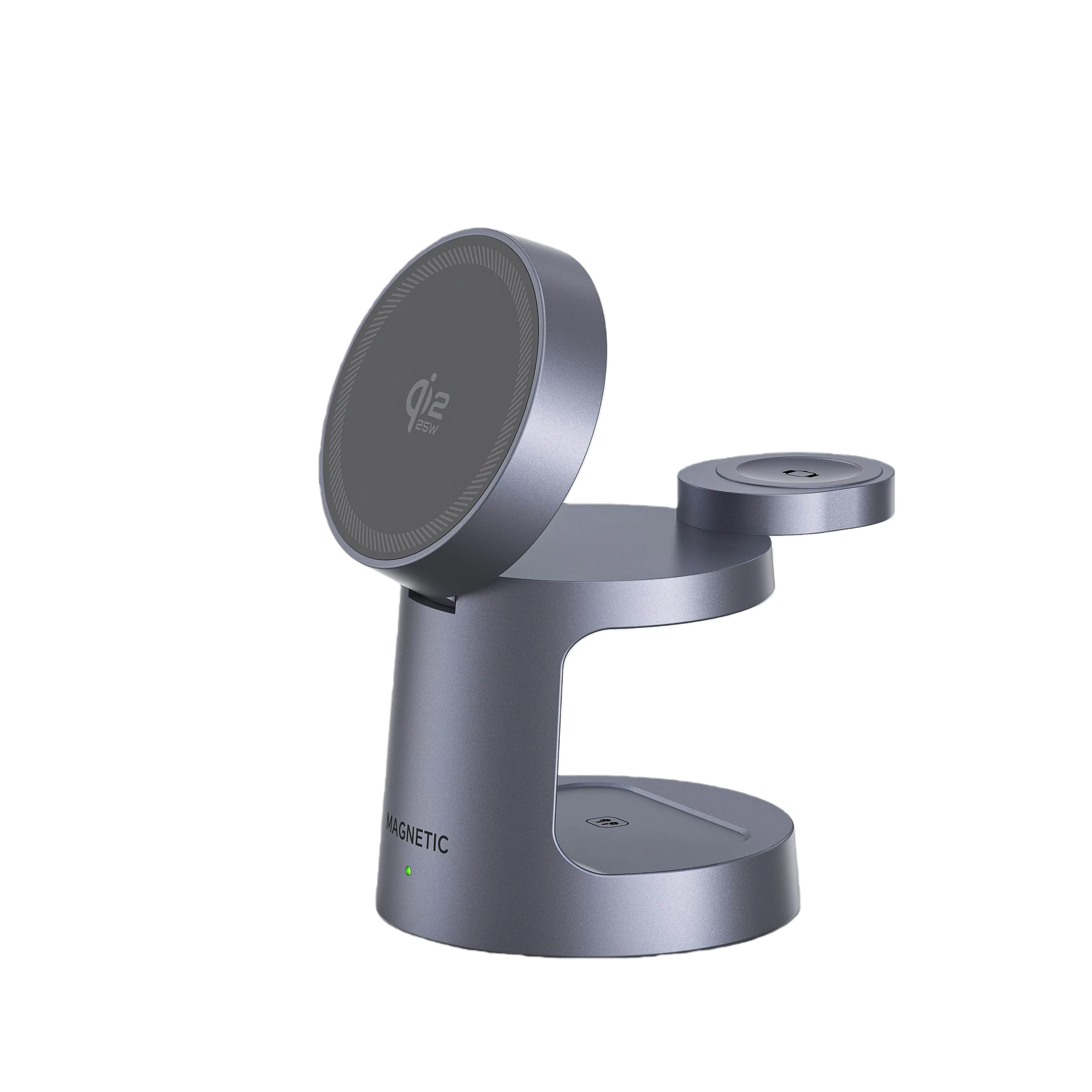
Choose the Base Model Before Designing the Brand Layer
Branding and packaging depend on the product geometry, material, charging configuration, included accessories and order quantity. Begin with a current model or a clear product format, then ask what can be changed without creating an unverified assumption about performance, certification or documentation.
Browse the current charging product portfolio and use Private Label or OEM/ODM to frame the request. A model such as the W108 foldable wireless charger can be a starting reference; its available logo, color and packaging options must still be confirmed for the quotation.
Private-Label Input Matrix
| Area | Buyer should provide | Supplier response to request |
|---|---|---|
| Base product | Model number, intended use, target devices and required configuration | Current written specification, sample availability and feasible changes |
| Brand assets | Vector logo, color references, placement, size and proof of authorization | Application method, printable area, color limits, artwork proof and durability questions |
| Packaging | Pack style, languages, dimensions constraints, copy, warnings, inserts and accessories | Dieline or template, material/finish options, MOQ, proof and sample process |
| Labels and identifiers | Model/brand details, regulatory copy, barcode/GTIN plan and destination-market needs | Available label locations, production data fields and required artwork format |
| Approval | Named approver, revision control and acceptance checklist | Pre-production sample or proof, change record and approved reference |
| Commercial scope | Quantity, target price context, timing and ship-to market | Quotation, MOQ, tooling/setup, sample cost and lead-time assumptions |
1. Send Production-Ready Logo Inputs
Provide a vector logo where possible, brand-color references, minimum-size rules, preferred placement and any clear-space requirements. Review the Logo Customization pathway, then ask which application methods and areas are feasible on the exact model.
The brand owner should confirm that it is authorized to use the artwork. WIPO describes trademarks as signs that distinguish one enterprise’s goods or services and notes that registration can provide exclusive rights in the relevant territory. ChargerNext does not decide trademark ownership; keep the rights review with the brand and its advisers.
2. Treat Packaging as a Controlled Data Set
Packaging is more than a visual mockup. Define pack structure, languages, product name/model, feature copy, included items, instructions, warnings, country or importer information, recycling or material marks where applicable, barcode area and any channel-specific labels. Use Packaging Customization to start the production discussion.
Keep performance and compatibility wording tied to the approved product specification. Do not place a standards logo, certification statement or wattage claim on packaging until the exact wording and entitlement are verified for the product and market.
3. Assign Barcode and Product-Identity Responsibility
GS1 states that the brand owner normally allocates the Global Trade Item Number for the trade item, including when an importer or retailer has a product manufactured and sells it under its own brand. Confirm who owns the GS1 company prefix, which package levels need identifiers and when a packaging or product change requires a new number.
Send barcode data as values and placement requirements, not only as an image pasted into artwork. The responsible brand team should verify numbering, scan quality and marketplace or retailer requirements before final approval.
4. Build a Sample and Artwork Approval Workflow
- Freeze the base model and written specification used for the branded sample.
- Issue logo and packaging files with revision numbers or dates.
- Approve a digital artwork proof before physical production.
- Review a representative branded sample or packaging sample where the project requires it.
- Check logo placement, color, legibility, pack contents, labels, barcode data and instructions.
- Record the approved files and reference sample; require written approval for later changes.
5. Keep Documentation Model- and Market-Specific
List the destination market and the exact documents or declarations needed for the program. The Compliance Support page describes how ChargerNext can review project requirements, but document applicability, testing and logo use must be confirmed for the selected model and configuration.
If a brand or package will make USB, Qi or other standards claims, verify the exact product record and applicable trademark or logo rules. A supplier’s general capability or a related product’s certificate is not a substitute for product-specific evidence.
6. Include the Commercial Inputs
- Base model and acceptable alternatives.
- Sample quantity and estimated production quantity.
- Destination market and intended retail, marketplace or promotional channel.
- Target devices, cables, adapters and included accessories.
- Logo method, placement, colors and artwork files.
- Packaging structure, languages, inserts, labels and barcode responsibility.
- Required documents, testing questions and approval timing.
- Requested delivery window and ship-to details for quotation.
Avoid These Common Assumptions
- Every logo method works on every material and product shape.
- A generic packaging image is a production-ready dieline.
- The factory or supplier should create the brand owner’s GTIN without written responsibility.
- A similar model’s test report or certification automatically covers the chosen configuration.
- A sample can change after approval without an updated record.
- MOQ, setup cost and lead time are the same for every model and packaging option.
Frequently Asked Questions
What files should I send for a logo?
Send vector artwork where possible, brand colors, placement and size preferences, clear-space rules and confirmation that you are authorized to use the mark.
Can ChargerNext confirm one logo method for every charger?
No. The feasible method and printable area depend on the selected model, material, geometry, artwork and quantity.
Who normally assigns the GTIN for a private-label product?
GS1 guidance says the brand owner normally assigns it. Confirm responsibility and package levels for your exact sales program.
When is the project ready for production?
After the base specification, quotation, artwork, packaging, labels, documentation plan and required samples or proofs have been reviewed and approved in writing.
Sources and Verification Links
- GS1 — Who is responsible for numbering trade items?
- GS1 — System Architecture and GTIN identification
- WIPO — Trademarks
- USB-IF — Logo license and usage requirements
- Wireless Power Consortium — Qi certification and product database
Prepare Your ChargerNext RFQ
Send the selected charging-product model and your logo, packaging, market and approval requirements, estimated quantity, destination market, target devices, branding and packaging requirements, and required documentation. ChargerNext will review the request against the current model and quotation scope.