
Charging product buyer guide
How to Compare Multi-Device Charging Stations for Wholesale and OEM Projects
By ChargerNext Sales Team · Reviewed 10 November 2026
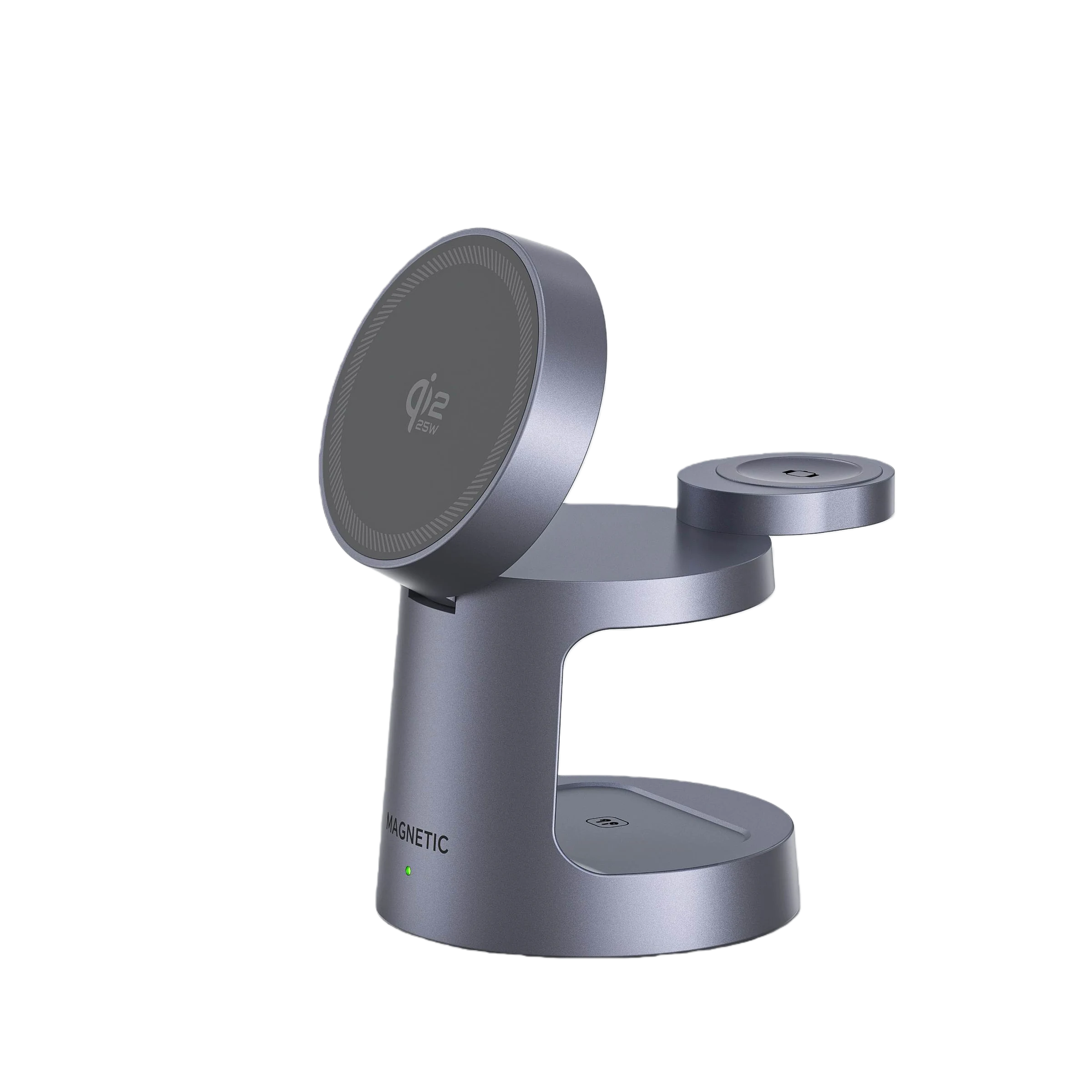
Compare multi-device charging stations by the devices they must charge together, the power supply and the physical layout. Treat stated phone output, watch support and earbud charging as separate checks. Agree a sample test using the intended devices, cases and adapter before approving a wholesale or OEM configuration.
Define the programme before the product shortlist
A bedside retail bundle, a travel accessory and an office desk station can use similar charging layouts while needing different packaging and usability checks. Record the selling channel, available desk space, travel expectations and target devices. A compact folded product is useful only if the unfolding process and cable routing also suit the intended user.
Start with the multi-device charging station range. Keep single-phone stands separate from multi-device stations. A product with three positions still needs confirmation of which phones, watches and earbud cases fit each position; the number alone does not establish compatibility.
Separate headline output from the complete charging scenario
Record what each output figure describes: the phone position, another device position, a wired connection or a system limit. Ask whether figures refer to a single active load or simultaneous use. Do not add independent maximum ratings together and treat the sum as an available system output.
The adapter and cable belong in the comparison. Request the required input profile, connector and cable specification, and confirm whether the quoted bundle includes the adapter. USB Power Delivery questions can be checked against USB-IF’s charger guidance, while the supplier still needs to identify the actual configuration offered.
- Record the phone, watch and earbud case used in the test.
- Record the input adapter, cable and active charging positions.
- Distinguish an advertised maximum from observed behaviour under the agreed conditions.
- Agree how interruptions, alignment and temperature behaviour will be assessed; do not invent a performance threshold.
Treat protocol claims and device fit as separate evidence
Magnetic alignment does not by itself establish Qi certification. When a certification claim matters to the project, use the WPC certified-product database to check the exact product identity. A supplier’s category name, an image of a logo or a similar model number is insufficient to establish that the offered variant is listed.
Use the Qi versus Qi2 buyer checklist for the standards-verification questions. Then check the target phone and case physically. Watch charging and earbud cases need their own confirmation. Avoid promising support for all models from a brand when the evidence covers only a particular test setup.
Compare folding, cooling and light functions in context
Existing catalogue references illustrate different selection questions. W108 includes a night-light feature, W98 presents a cooling design, and HY020 uses a foldable three-device format. These references help define a shortlist; they are not comparative laboratory results or proof of identical compatibility.
For a light feature, ask how it is controlled and whether it will be used during charging. For cooling, agree the operating scenario and acceptable sound characteristics. For folding, check stability, hinge movement and cable clearance with devices attached. Confirm these details on the sample rather than inferring them from a product photograph.
Build a comparison sheet that separates unknowns
- Identity: model, variant, photograph and quotation reference.
- Device layout: intended phone, watch and earbud case at each position.
- Power: stated output conditions, required input, adapter and cable.
- Usability: folded size, desk stability, controls and accessory storage.
- Evidence: datasheet, protocol claims, relevant documents and sample observations.
- Commercial scope: quantity, artwork, packaging, requested timing and unresolved questions.
Keep missing fields visible as questions. A blank adapter specification should not silently become an included adapter, and an unconfirmed watch position should not become a compatibility promise. This distinction makes quotations easier to compare and leaves an explicit record of what remains to be confirmed.
Prepare customization and packaging as a project scope
For private-label work, provide the proposed logo area, artwork, colour request, packaging dimensions and destination-language needs. Ask which requests are feasible on the selected model and whether they change sample approval or documentation. MOQ, timing and the final configuration need written quotation confirmation.
Discuss packaging requests together with the adapter and cable bundle. Include a packing layout, accessory list and instructions in the approval record. Review market-specific documentation separately; the importer documentation checklist explains how to connect documents to the exact product.
Frequently asked questions
Does 3-in-1 mean that every device charges at its maximum output together?
No. Three positions describe a layout. Confirm the supported devices, input source and simultaneous-output conditions for the selected configuration.
Should a buyer choose the highest stated phone output?
Compare output alongside receiver support, adapter requirements, sample behaviour and the intended use. A headline figure does not resolve those separate checks.
What should the first RFQ include?
Include the shortlisted models, devices and cases, expected simultaneous use, quantity, market, adapter bundle, artwork and required documentation. Use the charger RFQ guide to structure the request.