
Power Bank Sourcing Checklist: Capacity, Output, Built-In Cables and Private Label Options
Source a power bank by confirming the exact model’s rated capacity, input/output profiles, ports and built-in cables, target devices, physical format, sample behavior, customization scope and transport documentation. Compare written model specifications and test the complete setup; do not choose on a headline capacity or wattage alone.
Start With the Intended Use
A travel accessory with built-in cables, a magnetic wireless model and a compact wired emergency pack solve different buyer needs. Define the target device range, daily use, retail channel, size/weight preference, cable expectations and destination market before comparing products.
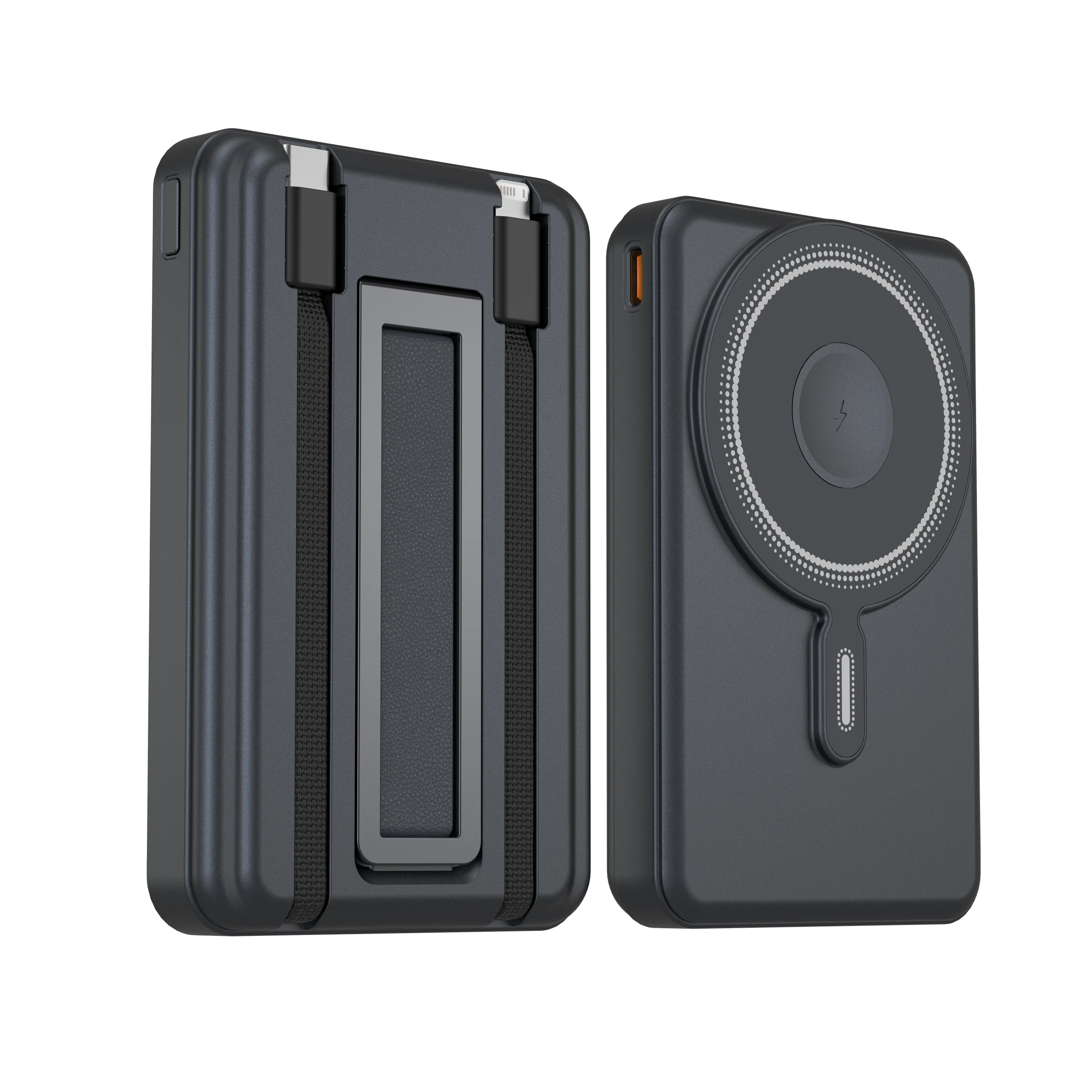
The Power Banks category provides a current model shortlist. The KH89 magnetic power bank with built-in cables is one reference; confirm its exact current specification and project configuration in the quotation.
Power Bank Comparison Checklist
| Area | Buyer check | Common ambiguity to remove |
|---|---|---|
| Capacity | Rated cell capacity, energy information and any rated output capacity supplied in the specification | A mAh headline does not by itself describe usable device recharges |
| Input | Port, supported input profiles and required charger/cable | Input speed can be confused with output speed |
| Output | Per-port and combined output profiles under defined conditions | Maximum wattage may not apply to all ports/devices |
| Built-in cables | Connector types, input/output role, length, storage and replacement expectation | A pictured cable may not support every claimed function |
| Wireless/magnetic | Standard/profile, alignment, device/case requirements | Magnetic appearance is not proof of a specific certification |
| Transport | Exact model’s battery test summary and shipment-mode documents | A document from another battery/model may not apply |
| Private label | Logo, color, packaging, labels, manual and quantity | Availability varies by model and process |
Capacity: Ask What the Number Describes
Capacity stated in milliamp-hours is useful for model identification, but it does not directly equal the energy delivered to a phone. Voltage conversion, device charging, cable and circuit losses affect usable output. Ask for the model’s written battery/energy information and any rated output-capacity information the supplier provides.
Do not publish a fixed number of phone recharges without a defined phone battery, test method and operating conditions. For buyer evaluation, compare the same target devices and conditions across samples.
Ports, Output Profiles and USB Power Delivery
List every input and output interface, including built-in cables. Ask for the supported voltage/current or USB Power Delivery profiles and clarify whether a stated maximum applies to one output or combined use. USB-IF describes USB Power Delivery as a negotiated power system that can support higher power levels; both connected products and cables must support the relevant behavior.
When USB certification or logo use is a requirement, verify the exact product through the USB-IF process/database and current logo rules. A USB-C connector by itself does not prove USB Power Delivery certification or a particular power level.
Built-In Cables Need Their Own Specification
A built-in cable can simplify use and merchandising, but include it in the quality and compatibility review. Confirm connector type, whether it is input, output or both, supported profile, storage method and intended bend/use conditions. Test the cable with the target device list and any other outputs used at the same time.
Also define what is included in the retail pack. Product images can show the body configuration but should not be treated as a complete packing list.
Battery Transport Documentation Is Model-Specific
Lithium-battery transport planning should begin early. The UN Manual of Tests and Criteria contains the UN 38.3 test framework used for lithium cells and batteries. Ask for the applicable test summary and shipment documents tied to the exact battery/product model, then confirm requirements with the freight provider and qualified parties for the planned mode and route.
IATA publishes current air-transport guidance, including guidance specific to power banks. Rules and operator practices can change, so do not copy a passenger rule or an old document into a commercial shipping plan without current verification.
Private-Label Inputs
- Selected base model and acceptable alternatives.
- Estimated quantity, destination market and sales channel.
- Logo artwork, placement, color references and preferred application method.
- Packaging languages, barcode, importer/brand information and inserts.
- Target devices and required wired/wireless use cases.
- Documentation and transport questions for the exact model.
- Sample inspection points and approval timing.
What to Confirm Before Order Approval
Confirm the written model specification, approved sample, artwork proof, packaging contents, battery identification, applicable test summary/documentation and quality checks. Use Global Shipping and Compliance Support as project discussion paths, not as a substitute for shipment-specific or legal advice.
Frequently Asked Questions
Does 10,000mAh mean a power bank can fully recharge every phone the same number of times?
No. Usable output varies with the phone, voltage conversion, charging behavior, cable or wireless losses and operating conditions.
Does USB-C automatically mean USB Power Delivery?
No. Confirm the supported profiles and, where certification is required, verify the exact product through official USB-IF resources.
Is a UN 38.3 document from a similar model sufficient?
Do not assume so. Ask for the applicable test summary and documentation tied to the exact battery/product being shipped.
Can built-in cables be customized?
Options depend on the exact model, material, process and quantity. Include the cable requirements in the feasibility and sample review.
Sources and Verification Links
- USB-IF — USB Charger / Power Delivery
- USB-IF — USB Type-C
- USB-IF — Certified product search
- USB-IF — Logo license and usage requirements
- UNECE — UN Manual of Tests and Criteria, Revision 8
- IATA — Power bank guidance for operators
Prepare Your ChargerNext RFQ
Send the selected power-bank model and the intended wired, wireless and built-in-cable use cases, estimated quantity, destination market, target devices, customization requirements and required documentation. ChargerNext will review the request against the current model and quotation scope.