
How to Choose a Wireless Charger Supplier for Wholesale and Private Label Projects
Choose a wireless charger supplier by matching current models to your target devices and market, then verifying the written specification, sample process, customization scope, quality plan and applicable documentation. Treat a product page as a shortlist tool—not as final confirmation for an order.
Why Supplier Selection Starts With the Project
A supplier cannot be evaluated in isolation from the program you are building. A compact magnetic charger for a phone-accessory range, a foldable multi-device station and a branded promotional product have different device, adapter, packaging and approval questions. Start by defining the use case, selling market, target devices, expected quantity and customization scope.
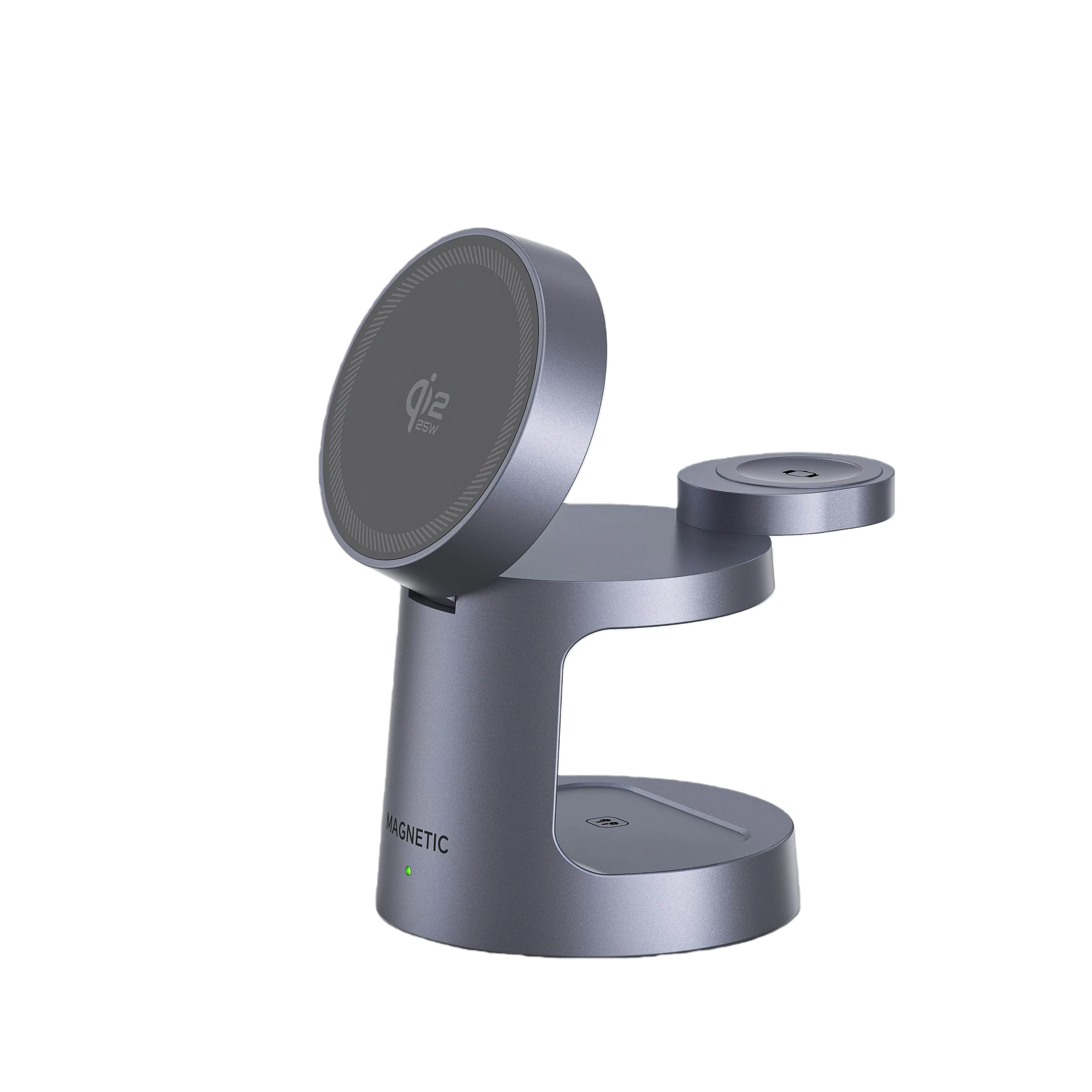
Use the Wireless Chargers category to create a model shortlist. For example, the W108 foldable wireless charger is a current reference model; its exact configuration still needs written confirmation for a project.
Wireless Charger Supplier Checklist
| Area | What to request | Why it matters |
|---|---|---|
| Model and configuration | Model number, charging positions, input, included accessories and current written specification | Prevents comparison of products that only look similar |
| Target devices | Phone, watch, earbud, case and adapter examples | Wireless behavior depends on the complete charging setup |
| Sample review | Representative sample and agreed evaluation points | Lets the buyer review fit, finish, alignment and everyday operation |
| Customization | Logo method, placement, colors, packaging and artwork requirements | Feasibility varies by model, process and quantity |
| Quality plan | Incoming, in-process and final checks relevant to the order | Connects expectations to an inspectable project plan |
| Documentation | Documents needed for the exact model and destination market | Requirements are product- and market-specific |
1. Verify the Exact Model, Not a Generic Family
Ask the supplier to put the model number and configuration on the quotation and sample record. Confirm charging positions, rated input, intended output profiles, ports, cable or adapter inclusion, materials, dimensions and available color options. If a headline wattage represents a combined or maximum configuration, ask how that figure is allocated and under what input conditions.
Do not assume two products with similar housings have the same electronics, magnetic arrangement or device support. Record the approved sample and specification revision so later comparisons refer to the same configuration.
2. Treat Compatibility as a Testable Matrix
Give the supplier a device list rather than asking whether the product is “universally compatible.” Include phone and watch generations, earbud cases, protective-case types and the power adapter planned for the retail pack or end user. A magnetic product also needs the intended alignment and case conditions defined.
For multi-device chargers, evaluate simultaneous use, physical spacing and the actual adapter/cable combination. Ask what the supplier can verify and what the buyer should test independently during sample approval.
3. Separate Standards Claims From Product Verification
Qi is a Wireless Power Consortium standard. A buyer should verify certification for the exact product in the official database when certification is required; a generic supplier statement or a similar certified model is not enough. Logo use and destination-market claims also need model-specific evidence.
ChargerNext’s Compliance Support page explains the project-level review approach. Confirm required documents before order approval instead of assuming that one document covers every configuration or market.
4. Define Samples, Quality Checks and Change Control
Write a sample checklist before the sample arrives. It can cover visual finish, stability, folding action, alignment, ports, indicator behavior, packaging contents and operation with the buyer’s device matrix. Technical and safety evaluation should be performed by qualified parties appropriate to the intended market.
Agree how approved artwork, packaging, specifications and reference samples will be identified. The Quality Control overview can help frame a project discussion, but the checks for each order should be stated in writing.
5. Scope Private Label Before Asking for Price
Send editable logo files, preferred placement, color references, packaging languages, barcode or label needs and any insert/manual requirements. Review Private Label, Logo Customization and Packaging Customization before the RFQ.
Customization availability, MOQ, sample cost, tooling, lead time and print result depend on the selected model and project. Ask for a feasibility response and artwork proof rather than assuming every option applies to every product.
What to Send in the First RFQ
- Selected model or product format and alternative models you are comparing.
- Estimated sample and production quantities.
- Destination market and intended sales channel.
- Target phones, watches, earbuds, cases and planned power adapter.
- Logo files, placement, colors and packaging languages.
- Required documentation, inspection or third-party testing questions.
- Target timing and any fixed launch constraints.
Frequently Asked Questions
Is the lowest unit price the best supplier-selection criterion?
No. Compare the confirmed configuration, included accessories, sample result, customization scope, documentation and quality plan alongside price.
Does a Qi label prove that every supplier model is certified?
No. When certification is required, search the official Wireless Power Consortium product database for the exact product and confirm the listing details.
Can one sample approve all future production?
A sample can define a reference, but the purchase specification, artwork revision, quality checks and change-control expectations should also be documented.
What should a private-label buyer provide first?
Provide the base model, quantity, target market, device list, logo artwork, placement, packaging needs and required documentation.
Sources and Verification Links
- Wireless Power Consortium — Qi wireless charging
- Wireless Power Consortium — Certified product database
Prepare Your ChargerNext RFQ
Send the selected wireless-charger model or product format, estimated quantity, destination market, target devices, customization requirements and required documentation. ChargerNext will review the request against the current model and quotation scope.